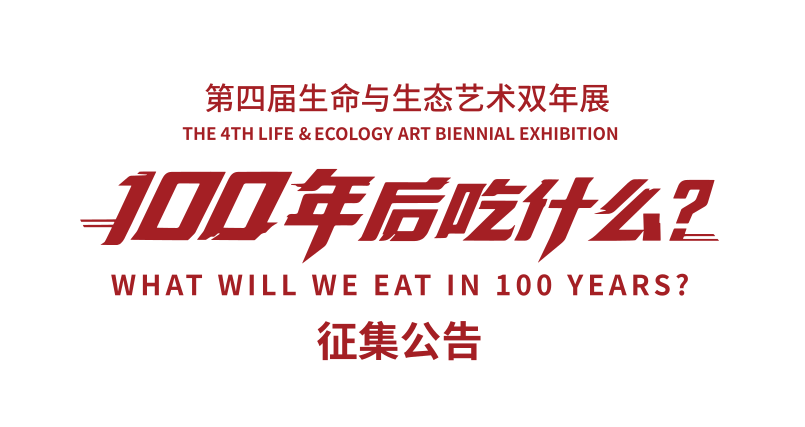
Fourth Life and Ecology Art Biennale · What will we eat in 100 years? · Open call
1 Project overview
The Fourth Life and Ecology Art Biennale takes “What will we eat in 100 years?” as its theme. It addresses climate change and food security, alongside the rapid development of artificial intelligence and speculative visions of how humanity may live in the future. The biennale invites artists, curators and interdisciplinary practitioners from China and abroad to explore new relationships of coexistence between people and nature, technology and life through artistic practice, with presentations in Wuhan, Shenzhen, Hong Kong, London and other locations, as well as online.
2 Exhibition information
- Chief Curator
- Shang Yunhua
- General Adviser
- Yao Weijun
- Academic Convenor
- Li Zhenhua
- Exhibition period
- 7 November 2026 – 7 November 2027
- Opening project
- Ark of Seeds by Italian artist Egle Oddo
- Opening venue
- Zhi Art Museum, Wuhan
3 Organising institutions
Organiser: Yide Art Foundation, Hong Kong
Supporting institutions: Hong Kong International Gastronomy Association; Food For Good; Zhi Art Space, Shenzhen; Food Theater; Zhi Art Museum, Wuhan; Shimenfeng Memorial Park; Jackie Chan Film Academy
4 Open call categories
Artworks
Work may explore future food, climate change, the survival of species, food security, land regeneration, ecology, AI and materials, life and health, art therapy and future ways of living. Experimental work across media, new materials and biological media is encouraged.
Independent curatorial proposals
Open to professional curators and curatorial teams. Selected proposals must respond to the biennale’s theme and include details of artists and artworks, exhibition design and feasible plans for implementing public art projects.
Residency applications
This biennale welcomes residency applications for Wuhan, Shenzhen and Hong Kong, lasting 15–45 days. Support includes an independent workspace, basic production facilities and assistance with local research. Travel, accommodation, meals, artistic stipends and funding to realise the work will be discussed in relation to the proposed project.
5 Funding
The biennale offers production grants. Artwork and residency projects may receive up to RMB 100,000 per project. Funding for curatorial projects will be determined separately according to the proposal and may exceed or fall below this amount. The grant must cover actual project expenses, including creative fees, production, equipment, transport, exhibition installation, on-site maintenance, curatorial fees and residency costs. The grant amount, payment milestones and criteria for accepting the completed work will be agreed in a project agreement signed by the organising committee and the selected applicant.
6 Review process
The biennale will establish an international review committee. Its members are:
Shang Yunhua, Liu Hui, Li Zhenhua, Valentino Catricalà (Italy), Thomas Eller (Germany), David Elliott (United Kingdom), Amani Mitha (United Kingdom) and Marianne Burki (Switzerland).
Assessment will consider the distinctiveness of the artistic concept, innovation in the use of media, the level of completion, relevance to life and ecological questions, and scholarly value. Reviews will be professional, fair and independent.
Results will be communicated through official email notifications.
Meet the committee ↗7 Submission periods
First phase: 7 November 2026 – 7 March 2027
Second phase: 8 March 2027 – 7 June 2027
Third phase: 8 June 2027 – 7 September 2027
Each phase closes at 24:00 (Beijing time, UTC+8) on its final day. The email sending time determines whether a submission meets the deadline. Late submissions will not be accepted.
8 Application materials and submission
Email subject formats:
Artwork applications: [Fourth Life and Ecology Art Biennale Artwork Application + Applicant Name]
Curatorial project applications: [Fourth Life and Ecology Art Biennale Curatorial Project Application + Applicant Name]
Residency applications: [Fourth Life and Ecology Art Biennale Residency Application + Applicant Name]
Submissions and enquiries:
Required materials:
1 Artwork applications: an artistic statement of no more than 300 Chinese characters, an artist biography of no more than 150 Chinese characters, and illustrated or video documentation of the work. Large-scale work and work using specialised media must include dimensions, weight, transport and installation requirements, and instructions for installation and maintenance. Email attachments must not exceed 30 MB in total and must be in PDF format. Larger files should be provided through a file-sharing link that remains valid and accessible over the long term.
2 Curatorial project applications: team CVs, previous curatorial projects, a complete curatorial proposal, details of the artistic projects to be exhibited and a budget, together with space, equipment, installation and deinstallation requirements.
3 Residency applications: an artist CV, documentation of work, a residency proposal, anticipated outcomes, an explanation of the feasibility of realising the work, and space, equipment and budget requirements.
Submission notes: each practitioner or team may submit up to three works or groups of works in the same phase. The same proposal must not be submitted again in multiple phases. Submitted materials will not be returned. Unsuccessful submissions will be used solely for assessment and will not be made public. The organising committee will retain them securely for 12 months before deleting them.
Organising Committee of the Fourth Life and Ecology Art Biennale
7 November 2026
Application forms
Download and complete the relevant form.
Forms are provided in Chinese.
Benefits for selected applicants
The biennale will establish a continuing archive of artistic outcomes.
1 An official certificate of selection for the Fourth Life and Ecology Art Biennale.
2 Selected artworks, curatorial outcomes and residency work will be presented through the Foundation’s official platforms, digital galleries, international channels including e-flux, and the official scholarly catalogue. Each selected artist will receive four copies of the catalogue.
3 Permanent digital archiving in art databases in China and abroad.
4 Opportunities for exchanges at international scholarly forums.
5 Outstanding projects may be included in satellite or touring exhibitions in Wuhan, Shenzhen, Hong Kong, London and elsewhere, and may be developed as public art projects.
6 Outstanding practitioners will be added to the Foundation’s roster and receive priority for future collaborations.
Copyright and intellectual property responsibilities
1 No application, review or exhibition participation fees will be charged to applicants at any stage of this open call.
2 All submitted artworks, curatorial proposals and residency proposals must be original. Applicants must hold complete and lawful copyright and all relevant permissions. Submissions must not involve infringement, plagiarism or simultaneous submission to multiple calls. Applicants assume all legal responsibility for any resulting copyright dispute or adverse social impact. If plagiarism or falsification is confirmed, the organising committee may cancel selection, recover all grant funding and pursue further liability.
3 Applicants retain their copyright and right to attribution in full. Within the scope of this biennale, the organising committee may use selected work for exhibitions for public benefit, scholarly archiving, publication and noncommercial communications.
4 Any acquisition of work, additional licensing, commercial development or other cooperation will be covered by a separate agreement.
5 The Chinese version is the official text of this announcement. Interpretation rests with the Organising Committee of the Fourth Life and Ecology Art Biennale. The committee will provide further clarification on matters not covered. Matters affecting the rights and obligations of individual applicants will be resolved through discussion between the organising committee and the applicant.